
دستور نيوز
Medical care – Abdul Hamid Ghanem:
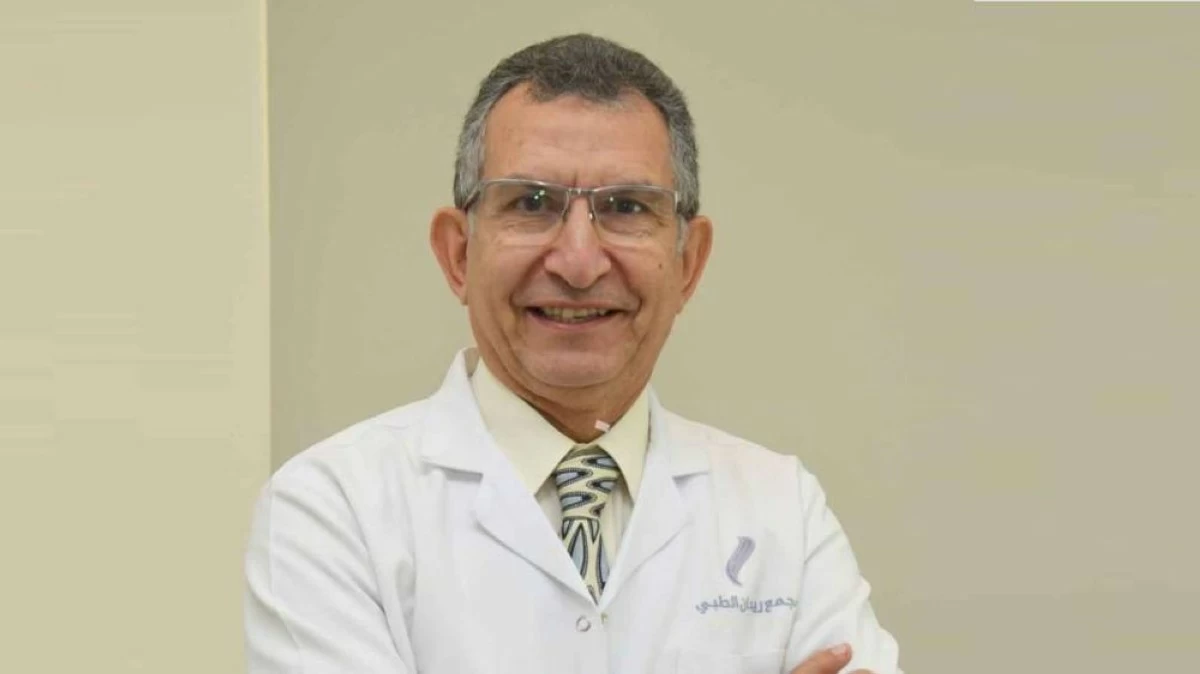
Varicocele is a common condition that affects many men, causing pain and tension in the testicle. In this dialogue with Dr. Imad Al-Din Al-Gosaibi, Consultant in Urology and Genital Surgery at Al-Rayhan Medical Complex, we will learn about varicocele, its causes, symptoms, types, degrees, seriousness, the extent of its impact on reproduction, methods of treatment, and its most prominent complications… Here are the details of the dialogue:
What is varicocele?
Varicocele is the presence of dilated or widened veins in the scrotum around the testicles that appear in the form of enlarged tubes that the patient often feels around the testicles.
What is the testicle?
The testicles are two major organs in the male reproductive system located inside the scrotum outside the abdominal and pelvic cavities. The temperature inside this sac is lower than the body temperature, and this is necessary for the production of sperm.
The function of the testicles is to form and produce sperm responsible for fertilizing the egg for pregnancy, as well as producing testosterone, which is the male hormone responsible for all the characteristics of masculinity.
What are the causes of varicocele?
– Any vein that usually carries blood in the direction of the heart, and there are tiny valves inside the veins that allow blood to pass in the direction of the heart and prevent it from returning in the opposite direction (gravity). In cases of varicocele, weakness occurs in the wall of the main vein of the testicle, and thus the internal valves lose their function, causing a disturbance in the passage of blood in the opposite direction (with gravity). This increases when standing for long periods, which leads to congestion and expansion of the veins over time, which is called varicocele.
Is it a widespread problem?
This problem occurs most frequently in young people from 18-30 years of age, and it increases even more at puberty, where we find this phenomenon in 16% of males.
What are the types of varicocele?
There are two types of varicocele:
First: – Primary varicocele: It is more common as a result of reflux within the testicular veins, which leads to the expansion and widening of these veins due to a congenital or hereditary defect in the testicular vein valves, and this in turn leads to a feeling of pain that increases over time.
Varicocele occurs on the left side in 75-90% of cases, and on both sides in 15-20%. Why? Because the length of the left testicular vein is longer than the right by about 7-10 cm, and the “angle” of entry of the left testicular vein into the left kidney vein is right, which increases the possibility of reflux.
Second: – Secondary varicocele: This means that there is another reason that led to the appearance of varicocele, and this type usually occurs over the age of forty, and thus this type occurs in equal proportions on the right and left sides depending on the presence of the main problem (the main cause), the most famous of which is the presence of tumors in the kidney or abdomen behind the peritoneum or the inferior vena cava, which leads to pressure or blockage of the testicular vein.
Therefore, when varicocele appears on the right side only (less frequently), it is necessary to conduct scans of the entire abdomen, such as sound waves, CT scans, and MRIs, to find out the cause, if any, and treat the main problem as soon as possible.
What are the degrees of varicocele?
Medically, the severity of varicose veins in men is classified into three degrees from mild to severe:
1. First degree “light”:
– The varicose veins should be small in size and not visible to the naked eye.
– Only palpable and detected by the doctor using and following the Valsalva maneuver.
– It does not cause obvious symptoms and the patient does not feel them.
– Veins are not visible, they can only be identified by imaging.
– Does not require immediate treatment.
2. Second degree “medium”:
– Men notice swelling or a feeling of heaviness in the testicle or discomfort, especially when standing for long periods.
– It can be felt when standing manually, but it is not visible.
– It appears clearly with Doppler, which is a technique for measuring the speed and direction of blood flow within the blood vessels in the testicle (via sound waves), and there is often reflux.
3. Third degree “more serious and obvious”:
– Testicular veins can be easily observed and prominent in the scrotum.
– It appears with the naked eye when standing.
-Strong and persistent symptoms.
– Pain and swelling in the scrotum, and sometimes a change in testicle size.
– It clearly affects sperm.
4. In some cases, it is called the fourth degree when there is excessive enlargement of the veins and significant swelling, which is a description of a very advanced condition.
What are the symptoms of varicocele?
Common symptoms include the following:
1. Feeling pain in the testicle while standing for a long time or doing physical effort.
2. Slight swelling or swelling at the end of the day.
3. A feeling of heaviness or heat in the scrotum.
4. Change in testicle size in advanced cases.
5. Decreased sexual desire as a result of stress, constant pain, and low levels of the male hormone “testosterone” in advanced cases.
6. Delayed childbearing in advanced cases without treatment.
What are the most dangerous types of varicocele?
The most dangerous type of varicocele is the third degree, where the dilated veins are very visible and are accompanied by pain that increases over time with effort or standing for long periods. This type leads to a defect in sperm production and may lead to infertility and testicular atrophy if it continues for a long time without therapeutic intervention.
Is varicocele dangerous?
The presence of dilation and reflux in the testicular veins leads, in turn, to an increase in the temperature around the testicle, which affects the functions of the testicle and the secretion of the hormone testosterone. Its absence leads to a decrease in the number, weak movement, and deformities of sperm, and a decrease in the chances of procreation, and its risk increases with the second and third degrees, which are the most dangerous.
Can varicocele cause infertility?
– Not everyone who suffers from varicocele suffers from infertility, as the first degree does not affect reproduction, but with advanced venous dilatation in the second and third “most dangerous” stages, and with an increase in scrotal temperature, this can lead to a change in the size of the testicle, poor blood circulation within the testicular tissue, and an imbalance in the semen in terms of movement, number, and deformities, which affects reproduction. Studies indicate that 40% of infertility cases are related to varicose veins.
Is it possible to have children with advanced third-degree varicose veins?
It is not necessary to have infertility with third-degree varicocele, but many cases of it greatly affect the chances of procreation, due to the presence of a major defect in the semen in terms of movement, number, deformities of the sperm, and atrophy of the testicles. These cases improve dramatically after the surgical procedure by a rate of up to more than 90%.
Does third degree varicocele require surgery?
– This degree is very advanced and the varicose veins are greatly expanded, and are often accompanied by the presence of significant venous reflux, and in such cases there is constantly increasing pain, in addition to a change in testicle size, with a significant impact on sperm and delayed childbearing, and in most cases the only treatment is surgical intervention to avoid further complications and achieve impressive results.
How do I know if the varicocele is of any degree?
– This depends on a clinical examination, performing ultrasound and Doppler on the testicles to measure the size of the testicle and testicular veins, and the presence of reflux in the testicular veins. Based on these examinations, the degree of varicocele is evaluated into a first degree, “mild,” a second degree, “moderate,” and a third degree, “severe.”
How is varicocele diagnosed?
Diagnosis begins with the patient complaining of testicular problems ranging from a feeling of heaviness or heat inside the scrotum or pain when touching the testicle skin to severe pain in the testicles and swelling of the scrotum that increases over time with the slightest effort or standing for long periods.
Then the clinical examination begins, through which the second and third degrees can be diagnosed, then imaging and Doppler of the testicular veins are performed to confirm and determine the degree of varicose veins accurately, and most studies consider a diameter exceeding 2.5 mm to be an indication of the presence of varicose veins.
There is also reflux within the veins, which is the most dangerous, most painful, and most influential in causing complications.
What are the treatment methods?
The degrees of varicocele are treated according to the following:
First: – First degree: There are no symptoms for the patient, and the ultrasound and Doppler rays determine this, and the treatment here is conservative and preventive only because complications do not occur, such as not standing for long periods, carrying heavy weights, and avoiding constant sexual arousal.
Second: The second degree: depends on the presence of varying symptoms for the patient. It increases with time when standing, and its presence is confirmed by ultrasound and Doppler, without complications or reflux. Here, conservative treatment can be used, such as medications when there is pain, along with applying cold compresses to the scrotum, avoiding standing for long periods, and not carrying heavy weights, with periodic follow-up with the doctor.
When there is increased pain, swelling of the scrotum, a change in semen, delayed childbearing, increased dilation of the veins, or the presence of reflux, which is detected by ultrasound and Doppler, the treatment here is surgical intervention to avoid the occurrence of complications that cannot be treated afterward, such as testicular atrophy.
Third: – The third degree: It is usually accompanied by severe symptoms, and is often accompanied by most complications, and is also confirmed by ultrasound, Doppler, and semen and testosterone analysis. The treatment here is the inevitability of surgical intervention or other therapeutic means.
Types of surgeries:
1. Microsurgery: It involves connecting the dilated veins through a small incision in the lower abdomen and using a microscope to examine and connect the dilated veins and preserve the artery and other fibrous vessels.
The advantages of this surgery are that it is the most common, has high accuracy and reduces complications, and a recovery period that does not exceed a week, some swelling occurs in the testicle that goes away after two weeks, sexual intercourse after three weeks, and the lowest rate of recurrence of varicose veins.
2. Laparoscopic surgery: It is done through an incision in the abdomen to insert the laparoscope. One of its advantages is that it is less invasive than microsurgery, faster recovery and less pain, and is used in moderate or mild cases. The varicose veins reflux rate is greater than microsurgery.
3. Catheter therapy through interventional radiology: It is closing the veins with injections without surgery, by inserting a catheter through a vein in the thigh and directing it to close the damaged vein with special materials to block the blood flow. It is a simple procedure that is performed with local anesthesia and has a quick recovery.
Complications of this treatment: pain or heaviness in the testicles and lower abdomen for a week, slight swelling where the catheter was inserted, failure to close all the affected veins, and recurrence of varicose veins at rates ranging from 5-15%.
4. Laser treatment: It is a non-surgical treatment, less invasive, less common, less painful, a shorter recovery period, but less results.
What happens if varicocele is not treated?
– In some simple cases of the first degree, complications do not occur over time, especially if you avoid standing for long periods of time continuously, and some exercises such as lifting weights or heavy loads and weights, but in most cases, especially the second and third degree, they have many complications in the event of lack of follow-up or medical intervention, and these complications include: worsening pain even without effort, swelling and deformities of the scrotum, the appearance of the testicular veins clearly under the skin, atrophy of the testicle and the occurrence of a defect in its functions, and delayed childbearing. As a result of the direct effect on sperm.
What are the most important tips for those suffering from varicocele?
Tips include the following:
1. Avoid standing or sitting for long periods.
2. Wear loose-fitting clothing.
3. Avoid heavy loads and weights.
4. Avoid constipation.
5. Avoid arousal and frequent masturbation.
Do not neglect the symptoms, as early detection contributes to preserving fertility and sexual and physical health.
What are the complications of varicocele?
Complications include:
1. Chronic persistent pain.
2. Testicular atrophy and abnormalities in its functions.
3. Impact on reproduction.
4. Deformities of the scrotum in advanced stages.
5. Testosterone deficiency.
#infertility #cases #related #varicocele
40% of infertility cases are related to varicocele
– الدستور نيوز
طب وصحة – 40% of infertility cases are related to varicocele
المصدر : www.raya.com