دستور نيوز
Nabil Youssef
Wednesday 11 March 2026 – 12:36
Source: Call of the Nation
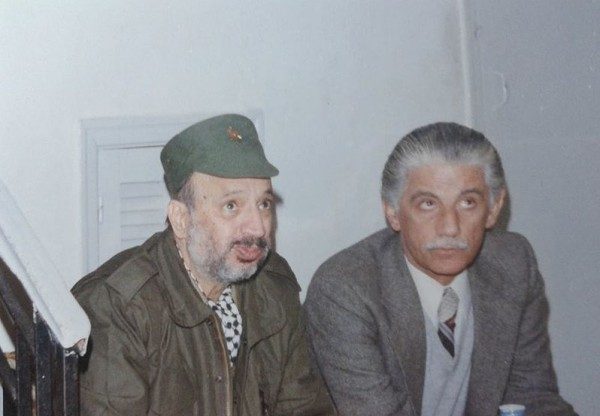
The Israeli landing in Nabi Shet in the Bekaa Valley was not the first for the Israeli army. The history of the Arab-Israeli conflict was filled with several mutual operations, the goal of which was to assassinate or kidnap a leader or official. Among those operations, which are not much known, was the attempt to assassinate the Palestinian leader Saeed al-Sabaa, known as “Abu Basil,” in Tripoli by the Israeli Mossad.
Who is “Abu Basil”?
He is Saeed Nimr Muhammad al-Sabaa, a Palestinian officer and politician whose father was the mayor of Qalqilya, where he was born in 1926.
He began his activity early in confronting the “Zionist organizations.” He founded the “Fatwa and Help” organization in his city. The Palestinian leader Abdel Qader Al-Husseini, the father of Faisal Al-Husseini, appointed him responsible for “holy jihad” in the Qalqilya region. He sent him in 1946 with Dr. Daoud Al-Husseini to North Africa to buy weapons left over from World War II.
He participated in the 1948 war, and after the declaration of a ceasefire, he joined the Jordanian army and was among the group of officers who formed a secret organization that carried out the movement of March 1, 1956, “to liberate the army’s decision from General Glubb Pasha and cancel the Jordanian-British treaty.” As a result of the protests that Jordan witnessed in 1957, he was accused of participating in an attempted coup against the monarchy, so he was sentenced to death. He took refuge in Syria, and from there to Egypt, returning to Jordan in 1965 after the issuance of King Hussein granted a general amnesty to the Jordanian Free Officers.
He was one of the founders of the Palestine Liberation Organization with several Palestinian leaders, including his cousin Walid Ahmed Nimr al-Nasr “Abu Ali Iyad,” and his cousin Farouk al-Qaddoumi “Abu al-Lutf.” After the independence of Algeria, he was the organization’s first representative there. He returned and was appointed the first representative of the Palestine Liberation Organization in Sudan until the beginning of 1969, when he moved to Lebanon, and was appointed director of the Popular Organization Department in the Liberation Organization as Farouk’s deputy. Al-Qaddoumi participated in operations against Israel, most notably planning and leading the kidnapping of Israeli soldier Shumiel Rosenfizer from the borders of southern Lebanon on January 1, 1970 and transferring him to Aleppo. Later, a prisoner exchange took place during which Israel released Mahmoud Bakr Hijazi, its first Palestinian prisoner, whom it accused of participating in planning the Munich operation in which Israeli hostages were taken during the Summer Olympics held in West Germany, in September. 1972 and put his name on the assassination list.
An attempt on his life
In early 1972, in his capacity as head of the Supreme Council for Palestinian Youth Welfare, Abu Basil sent two letters to the International Olympic Committee requesting the participation of the Palestinian delegation in the Olympic Games in Munich. The request was rejected, and West Germany also refused to give any Palestinian an entry visa to attend the games, and this was the famous process.
Some time after the Verdun operation was carried out at dawn on April 10, 1973, in which the leaders Abu Youssef al-Najjar, Kamal Nasser, and Kamal Adwan were killed, a group from the Mossad, led by Mike Harari, head of the Israeli Kidon unit, arrived in Tripoli, where Saeed al-Saba was staying. They stayed in apartments rented to them by local collaborators near Abu Basil’s house on Culture Street: Why was Saeed al-Saba residing in Tripoli?
“Abu Basil” married Najwa Al-Merhebi, the cousin of MP Talal Al-Merhebi, and lived in an apartment on Al-Thaqafa Street.
How did you discover the process threads?
The Palestinian story says: “Abu Basil” was an intelligence officer and was very careful in his movements. More than once, he saw someone standing on the balcony of a house opposite his house. On one occasion, he spotted him from inside his house, and he had a camera with him, so he asked his companions to inquire about who he was. It turned out to be a German named Urlich Lossberg. It later emerged that he was an Israeli named Danny Yatom, who entered Lebanon on a West German passport.
They started monitoring him until he was seen entering a photography studio on Azmi Street called “Renoir Photography.” After he left, whoever was watching him entered and asked the studio owner about him and what he had come to do? He told them that he was German and had an endorsement film.
After developing the film, nothing unusual appeared on it, but he was seen in the studio, encased in pictures of Al-Thaqafa Street and its houses: The studio owner was asked who owned the film? He replied that he was a Scottish engineer named James Ball.
Copies of the photos were sent to Abu Hassan Salama and the officer of the Second Division in the North, Albert Samaha. The officer of the Second Division in Tripoli, Major Jean Al-Qasouf, has another story that says that he was working in the “Renoir Photography” studio, a young man from Tripoli named Bilal Jabakhenji who was cooperating with the Second Division. The pictures caught his eye when they were being developed and were taken of Al-Thaqafa Street, building entrances and apartment entrances, so he endorsed a second copy of the film and handed it over to the Second Division. According to Al-Qasouf, the one who brought the film to the studio was Jamila Maatouk. It later became clear that most of the pictures were taken from the home of the Scottish engineer James. Paul.
Al-Qasouf adds: The search began for the secret of this film? It turns out that all the pictures revolve around Saeed Al-Saba’s house and the roads leading to it, and among the pictures is the door of the house.
An inventory of the residents of the houses surrounding Saeed Al-Saba’s house began to show that German Urlich Losberg was residing in the apartment of Jamila Matouk’s family. How did Losberg get to the Matouk family’s apartment?
Jamila Maatouk was studying at the Lebanese University in Beirut, and she met Losberg and they bonded over a friendship that turned into love. He began coming to her home in Tripoli with the aim of getting married, and at that time he was her fiancé.
Major Jean Al-Qassouf says: Jamila was a “bait” to enter Tripoli, and it was proven in the investigation that she did not know the true identity of Losberg.
An apartment was discovered in the building where Saeed Al-Saba resides, located on the seventh floor immediately after the floor he lives in. It was rented by a woman with a British passport, called Sylvia Raphael, along with two Britons who work at the IPC oil refinery in Al-Beddawi, and another apartment about 50 meters away from Orlich Losberg’s apartment, in which a Scot named James Ball resides. It appeared during his surveillance that he was hovering around Saeed Al-Saba’s house: it was later revealed that his real name is David Kamhi, one of the individuals. The group, and from this apartment, most of the pictures of Saeed Al-Saba’s house, his movements, and his visitors were photographed.
There is also another apartment located directly on the sixth floor above the home of Jamila Maatouk’s family, rented by an American priest named Robert Malloy, whose real name, it turns out, was also being filmed from.
At some point, it seems that the Israeli unit realized that it had been exposed, so the group fled through Beirut Airport on June 20, 1973, with the exception of Urlich Losberg, who lost contact with him.
How did the Israeli group learn of its discovery?
After research, it turned out that Abu Hassan Salama informed the CIA station official in Beirut, Robert Ames, about the matter, warning of the repercussions of any operation targeting Saeed Al-Sabaa, so the group was informed that it had been exposed.
What happened to Orlich Losberg?
On July 10, 1973, a statement bearing the name “Munich 72 Guerilla Organization” reached newspaper delegates in Tripoli, adopting the kidnapping of Aurlich Losberg in response to the West German government’s negative attitude towards the Palestinians it had arrested after the Munich operation.
How did the Losberg kidnapping happen?
Losberg entered the “Top” café in Tripoli, and three gunmen followed him, covering their faces with the Palestinian keffiyeh. One of them fired three bullets and took him away. Immediately, the security services were mobilized, and the city’s gendarmerie commander, Brigadier General Issam Abu Zaki, was summoned to meet President Franjieh, who informed him that West German Ambassador Walter Nowak had visited him and told him that Aurlich Losberg was a German diplomat, and insisted on knowing his fate as soon as possible.
The investigations intensified, and it became clear that there was something unrealistic in the kidnapping until some leads reached Tripoli, with a person named Ahmed Raslani, that there was information with a person named Abdul Aziz Ghazawi that might benefit the investigation.
Raslani informed Brigadier General Abu Zaki of his information, and Al-Ghazzawi was ambushed as he was leaving the Metropole cinema. He was taken to the city’s gendarmerie command. Immediately upon his arrival, he confessed to everything and told in detail what had happened and what he had narrated: that Eurich Losberg, after leaving the Maatouq family’s house, rented a room in the Montazah Palace Hotel in Tripoli and asked him to carry out the kidnapping, and gave him an amount of 50 thousand liras. This amount was a fortune at that time, and that he came to the “Al-Top Café” along with Hassan Tawfiq Al-Hassan and Hamid Boutros Farah, kidnapped him and took him to a house they rented in the town of Al-Azima Field in Al-Dinniyeh, where he is currently present. He was the one who distributed the statement at Losberg’s request.
The picture became clear and what was required was to arrest Losberg, and there was a strict order that no harm befall him during his arrest, so Brigadier General Issam Abu Zaki and his assistant Samir Abu Joudeh went at the head of a force and entered the house and arrested him after he tried to resist them, but they were faster than him and tied him up. 20 Lebanese who cooperated with him were also arrested, and his room in the “Montazah Palace” hotel, which he had visited on the day the rest of the group left, was raided and files, pictures and sums of money were confiscated from it.
During Al-Ghazzawi’s interrogation, the attempt to assassinate Jules Massad, the honorary West German consul in Tripoli, was also revealed. He explained that Lossberg had asked him to provide hired killers to kill the consul and hold the Palestinians responsible, in response to the Munich operation, so Al-Ghazzawi commissioned a hired killer to carry out the operation.
The killer knocked on the door of the consul’s apartment on Gemmayzet Street in Tripoli, and the consul’s wife asked him who he was and what he wanted. He replied that he was coming to talk to the consul about a transaction that concerned him, and her answer was that he was currently asleep.
She looked through the door and saw him wearing a Palestinian keffiyeh, and despite his insistence, she did not open the door for him, so he left. She returned and told her husband, who informed the security forces about what had happened.
Losberg was referred to the military court and interrogated by the military investigator, Elias Assaf. He confessed that he was monitoring Saeed Al-Saba’s house, in addition to that he had taken pictures of Kamal Jumblatt’s palace in Mukhtara, Tony Franjieh’s house in Ehden, Wadih Haddad’s house in Beirut, and that he had attempted to kill the West German consul in Tripoli. Regarding his kidnapping, he admitted that everything that happened was his plan to accuse Saeed Al-Sabaa of kidnapping a German tourist in response to the West German government’s negative position on the participants in the Munich operation, and the entanglement between the Lebanese state and the “PLO” in Lebanon and the attempt to renew the battles that broke out between the state and the guerrillas in the month of May. As for the Lebanese who cooperated with him, it was confirmed that they did not know his true identity and helped him out of the hope of financial gain, so the accusation of dealing with the enemy was dropped from them.
Many interventions, especially from the embassies of West Germany, the United States of America, and Britain, led to the closure of Aurlich Loesberg’s file and his departure from Lebanon to appear later in Israel, under the name Danny Yatom, who held several security positions, including security advisor to Prime Minister Yitzhak Rabin and director of the Mossad from 1994 to 1997. He resigned after the failure of the assassination of Khaled Meshal.
As for Saeed Al-Sabaa, he remained in Tripoli until a dispute arose between him and Yasser Arafat in the summer of 1973. He resigned from the “Palestinian Liberation Organization” and left for Syria. He returned and moved between Iraq, the Arab Emirates, and Libya. In late 1978, his daughter Lina died when she was 17 years old. He returned to Tripoli for her funeral, and most of the leaders and officials of the “PLO” went to him. Through the mediation of “Abu Iyad,” he reconciled with Yasser Arafat and was appointed. A member of the organization’s Supreme Planning Council, he remained in Tripoli after Yasser Arafat and the Liberation Organization left in 1983. After suffering from cancer, he moved between Tripoli and Amman for treatment until he died in the Jordanian capital on June 30, 1995.
To this day, Israel is still concealing the details of this operation, and it is one of dozens of operations that took place in the Arab-Israeli conflict.
Published articles represent the opinion of their authors
#Israeli #cell #Tripoli #assassinate #Saeed #AlSabaa #Voice #Lebanon #Voice #Lebanon
An Israeli cell in Tripoli to assassinate Saeed Al-Sabaa – Voice of Lebanon – Voice of Lebanon
– الدستور نيوز
اراء و اقلام الدستور – An Israeli cell in Tripoli to assassinate Saeed Al-Sabaa – Voice of Lebanon – Voice of Lebanon
المصدر : www.vdl.me