دستور نيوز
Tony Boulos
Monday, February 23, 2026 – 12:43
Source: Independent Arabia
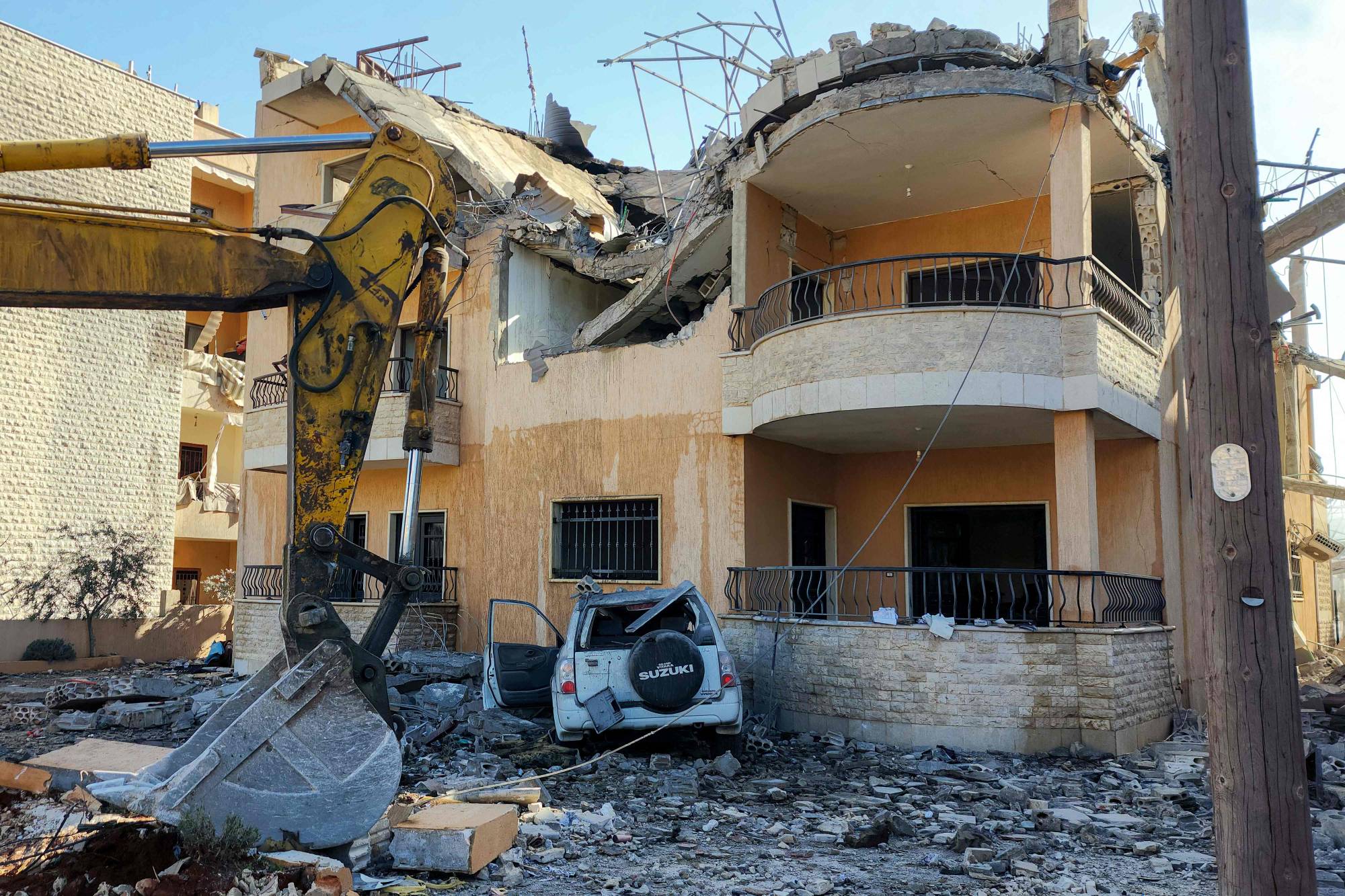
The recent Israeli attacks in the Bekaa region (east) did not come out of nowhere, and cannot be isolated from the intertwined regional context surrounding Lebanon since the end of the major round of war between Israel and Hezbollah in 2024. What happened deep in the Bekaa was read by some political circles as a decisive Israeli message that clearly reached the party and the Lebanese state together, entitled that the first post-war period is not a period of truce for military rebuilding, but rather a stage of careful monitoring and proactive prevention of any attempt to restore or restore the party’s capabilities. Especially with regard to missile weapons, which Israel still considers the first existential threat on its northern front.
In this time gap between the war that occurred and the war that is feared to return, Israel was not absent from the Lebanese scene, and was not satisfied with political or media follow-up. According to data circulated in Israeli and international reports, the Israeli security establishment was present deep within Hezbollah’s structure, monitoring its movements, restructuring its organizational networks, following up on the new appointments that took place after the losses it incurred during the last confrontation, and re-updating its target bank on the basis of accumulated intelligence information. From this standpoint, the Bekaa strike can only be understood as the culmination of a long process of monitoring and tracking.
Militarily, the Bekaa region is of exceptional importance to Hezbollah, as it is the deepest strategic reservoir for its weapons, where it has accumulated the heaviest and most sensitive part of its military arsenal, especially the medium- and long-range and most accurate missiles, all the way to what Israeli and Western reports classify as ballistic missiles, in addition to mobile launch systems and drone weapons, which in recent years have turned into a central element in the party’s combat doctrine, and raises constant concern in the media and military reports. Israeli.
Weapons and civilians
Cross estimates indicate that a large part of this arsenal is still present underground, within networks of tunnels and fortified warehouses, some of which are located in the vicinity of populated areas or under them, in a clear attempt to create a counter-deterrence equation based on the combination of weapons and civilians. Hence, targeting the Bekaa Valley does not only mean attacking a site or meeting, but rather it means approaching the backbone of the party’s ability to withstand and reposition militarily.
This explains why a number of observers likened what happened to the “Al-Radwan Force” strike that preceded the expansion of the 2024 war. The similarity does not lie in the number of raids or the type of ammunition used, but rather in the nature of the goal and message. In both cases, Israel was not targeting passing launch pads or small field groups, but rather a command and operational structure that is the cornerstone of any broad escalation scenario. The fundamental difference is that the Bekaa strike this time came in light of a fragile ceasefire, which means that Israel no longer considers the truce a restriction preventing it from operating deep inside Lebanon, but rather a framework within which it moves whenever it sees that a strategic threat is emerging.
“Preemptive strike”
In this context, the official Israeli explanation strongly emerges, which sees the recent raids as a “preemptive strike” to prevent the launching of missiles from the Bekaa towards Israel. This interpretation was reinforced by what was revealed by the Israeli Broadcasting Authority “Kan” in a report in which it talked about monitoring unusual activity in Hezbollah’s fire systems, especially in the field of missiles, during recent days. According to the report, the Military Intelligence Division and the Northern Command of the Israeli army noticed a reorganization within the ranks of the missile system, which included the rehabilitation of launch pads, despite the strikes the party had previously received and the continued Israeli raids.
What is most dangerous in this report is that it directly links these movements to a broader regional scenario, according to which Hezbollah is preparing to launch missiles if the United States attacks Iran. In this case, the bombing from Lebanon is not isolated, but rather part of a multi-front confrontation in which Iran participates directly through the Revolutionary Guards, along with the Shiite militias in Iraq and the Houthis in Yemen. This scenario, as presented by Israeli estimates, automatically places Lebanon at the heart of any American-Iranian confrontation, even if the party is not willing to do so, due to its political and ideological commitments within what is known as the “Axis of Resistance.”
According to the Israeli account, these data were one of the main reasons for carrying out air strikes in the Bekaa Valley that targeted three party headquarters, and led to the killing of eight members of the missile unit, in what was described as the largest escalation since the assassination of the party’s chief of staff, Ali Tabatabai. In parallel, Israel detected what it described as signals coming from the party’s leadership indicating that its patience with Israel is running out, which places the party’s Secretary-General, Naim Qassem, before a very complex equation: an ideological and political commitment towards Tehran on the one hand, and an awareness that any direct intervention will attract a broad Israeli response, and may reopen the party’s weapons file inside Lebanon with unprecedented force on the other hand.
Participation of the “Revolutionary Guard”
This reading intersects with Western reports that talked about the intensification of military and security meetings within the party’s leadership in the recent period, in anticipation of any possible escalation, with the participation of officers from the “Iranian Revolutionary Guard” in managing these preparations. Some of these officers were previously present in Lebanon, while others recently arrived, in light of the mounting talk about the possibility of an American strike on Iran, and despite the absence of official public confirmation of these data, their coincidence with the Israeli strike in the Bekaa Valley gives it additional weight in the balance of analysis.
Within this discussion, the military specialist, retired Brigadier General Saeed Al-Qazah, presented a striking reading of the implications of the recent attack. In his opinion, “there is nothing fundamentally new in Israel’s behavior other than the large number of civilian casualties, as Tel Aviv pursues any danger it considers a threat to its security, even if that leads to the fall of large numbers of civilians that it classifies as collateral damage.” Al-Qazah cited what happened in the Gaza War, when Israel destroyed entire neighborhoods to assassinate leaders, which led to hundreds of casualties. From this standpoint, he saw that “Israel does not actually adopt a policy of deterrence messages with ‘Hezbollah’, because it realizes that it will not be deterred if the fate of the Iranian regime is at stake, and that it is prepared to pay enormous human and material costs to implement Tehran’s orders, as Sheikh Qassem explicitly expressed on more than one occasion.” Al-Qazzah went on to consider that what happened in the Bekaa was a double action, targeting a ballistic missile launch pad in the Shaara (Bekaa) area, in addition to bombing members of the missile unit. During their meeting, in a pre-emptive strike aimed at preventing the implementation of an attack that was being prepared, he added that talk of a “prior warning” to the party against interfering in an upcoming war between the United States and Iran has no practical meaning, “because the party will carry out what is asked of it, whatever the cost.”
navy
What is noteworthy in this context is that Israel used, for the first time, its naval force to bomb the Bekaa Valley. This step carries a dimension that goes beyond the operation itself, as it constitutes a double message that Israel has sufficient diversity in its military means to deal with any threat, even if the Air Force is busy with other defensive tasks. It also represents a practical test of the missile capabilities carried by the “Sa’ar 6” naval frigates, which are among the newest pieces in the Israeli naval fleet.
Delegitimization
In addition to the military dimension, the media-political dimension of the strike clearly emerged, especially with regard to the issue of civilians. Israeli army spokeswoman Ella Wawiyeh announced that the raids targeted three Hezbollah command headquarters that were deliberately established among population centers in the Bekaa, and she posed a direct question: Why is there a Hezbollah missile system in the heart of civilian neighborhoods? It went further by accusing the party of using civilians as human shields, and of choosing to place its headquarters and missile platforms between family homes and schools, directing a direct address to the Lebanese about their acceptance of turning their villages into military bases that serve agendas that lead the country toward destruction.
This discourse cannot be separated from preparation for any future escalation phase, as it aims to delegitimize any Lebanese or international objection to future strikes, by holding the party directly responsible for any civilian losses. At the same time, it places the Lebanese state in the face of double embarrassment, because it becomes required, before the international community, to prove that it does not cover the use of civilian areas for military purposes.
America and declaration of war
According to Western diplomatic information, the Lebanese state was clearly informed that the United States will not tolerate any field movement by Hezbollah in the next stage. The American message, as I reported, is very clear: Any missile launched from Lebanon, in any direction, will be considered a declaration of war, not only against Israel, but against the United States itself. In this case, the Lebanese state will be held fully responsible, and the green light will be given to Israel to carry out large and broad strikes inside Lebanon, with the possibility of the confrontation expanding beyond limited strikes.
Within this broader American vision, there is also talk about a possible regional role for Syrian President Ahmed al-Sharaa, who is seen in Washington as a key ally within the new regional stability project. On the other hand, Iran and Hezbollah are classified as agents of destabilization, which means that any tolerance for using Lebanon as a military platform will not be acceptable in the next stage, within the framework of rearranging the Middle East according to new balances.
In this complex scene, official Lebanon finds itself facing an extremely dangerous test, as the state implicitly acknowledges that the Bekaa represents the most difficult node in Hezbollah’s weapons file, as it is the main strategic reservoir for this weapon. I pledged, in cooperation with the army, to develop a slow and gradual plan to control the situation and prevent any military action from this area. On the basis of this pledge, Washington granted a kind of conditional guarantee, based on giving time to the Lebanese state, on the condition that it demonstrates tangible action on the ground. However, this guarantee is not open-ended. If it becomes clear that the state is incapable or unwilling to carry out its responsibilities, the door will open to other options, the least of which is the expansion of Israeli targets, the most of which is Lebanon’s slide once again into a wide-ranging war that it has no decision on and no real ability to bear the cost of.
According to the information, Parliament Speaker Nabih Berri conveyed a message to Hezbollah Secretary General Naeem Qassem confirming the seriousness of the situation in light of Qassem’s words about refusing to remain neutral in the event that America launched a war on Iran, warning that any new “war of support” would lead to the complete isolation of the party and a comprehensive boycott, including the “Amal” movement, which might break up the alliance that has existed between them for 30 years.
“Strategic Patience”
In a related context, journalist George Al-Aqouri saw that the existing reality no longer tolerates ambiguity or time management, but rather requires Hezbollah to make its political and military choice with complete clarity. In his opinion, “there is a real necessity for the party to reach a final conviction: either it decides to actually stand behind the Lebanese state, abandoning its military wing, and openly announcing that it will turn to political action, and hand over to the state all of its positions, arsenal, and military structures, or it chooses to confront Israel directly and alone bear the consequences of this decision, Without keeping Lebanon hostage to a sustained war.” Al-Aqouri pointed out that the continuation of the situation that has existed since the ceasefire agreement has practically put Lebanon in a state of undeclared war, “the price of which is paid by civilians first, in addition to a huge economic, social and structural cost affecting the state and society.” He considered that the party cannot continue to raise the slogan of “strategic patience while its field actions contradict this slogan and expose the country to accumulated dangers, in a scene reminiscent of the experiences of regimes that used time as a means of escaping entitlements.”
Regarding the predicament that the Lebanese state is experiencing, Al-Aqouri pointed out that this predicament is exacerbated when “Hezbollah holds its military meetings inside crowded civilian areas, which turns civilians into human shields and gives Israel a permanent pretext to justify its attacks, as the illegal weapons were not handed over to the state, and their maps were not placed at the disposal of the army, which restricts the state’s ability to political and diplomatic confrontation.” He stressed that the oath letter and the ministerial statement were clear in demanding the implementation of the constitution. The exclusivity of weapons is in the hands of the state, and President Joseph Aoun has tried since his election to open a negotiating path with Hezbollah in good faith, without reaching tangible results. Hence, the session of August 5 came as a sovereign station that confirmed the decision to end all illegal weapons, and stressed, “The Lebanese army is doing its part, but the absence of Hezbollah’s cooperation and its refusal to hand over its sites and facilities hinder any serious treatment, and paralyze any margin for diplomatic action, as the international community links any actual pressure on Israel to the ability of the Lebanese state to exclusively control the decision on war and peace.” Al-Aqouri concluded by stressing that the Israeli attacks are condemned and rejected, “but ending Illegal weapons remain the mandatory gateway to protecting Lebanon, because the continuation of this reality places the country in front of imminent dangers that cannot be tolerated, and leads it towards confrontations that exceed its ability to endure.”
Published articles represent the opinion of their authors
#decisive #American #message.. #Lebanese #Bekaa #scene #war #support #Voice #Lebanon #Voice #Lebanon
A decisive American message… Will the Lebanese Bekaa be the scene of the second “war of support”? – Voice of Lebanon – Voice of Lebanon
– الدستور نيوز
اراء و اقلام الدستور – A decisive American message… Will the Lebanese Bekaa be the scene of the second “war of support”? – Voice of Lebanon – Voice of Lebanon
المصدر : www.vdl.me