دستور نيوز
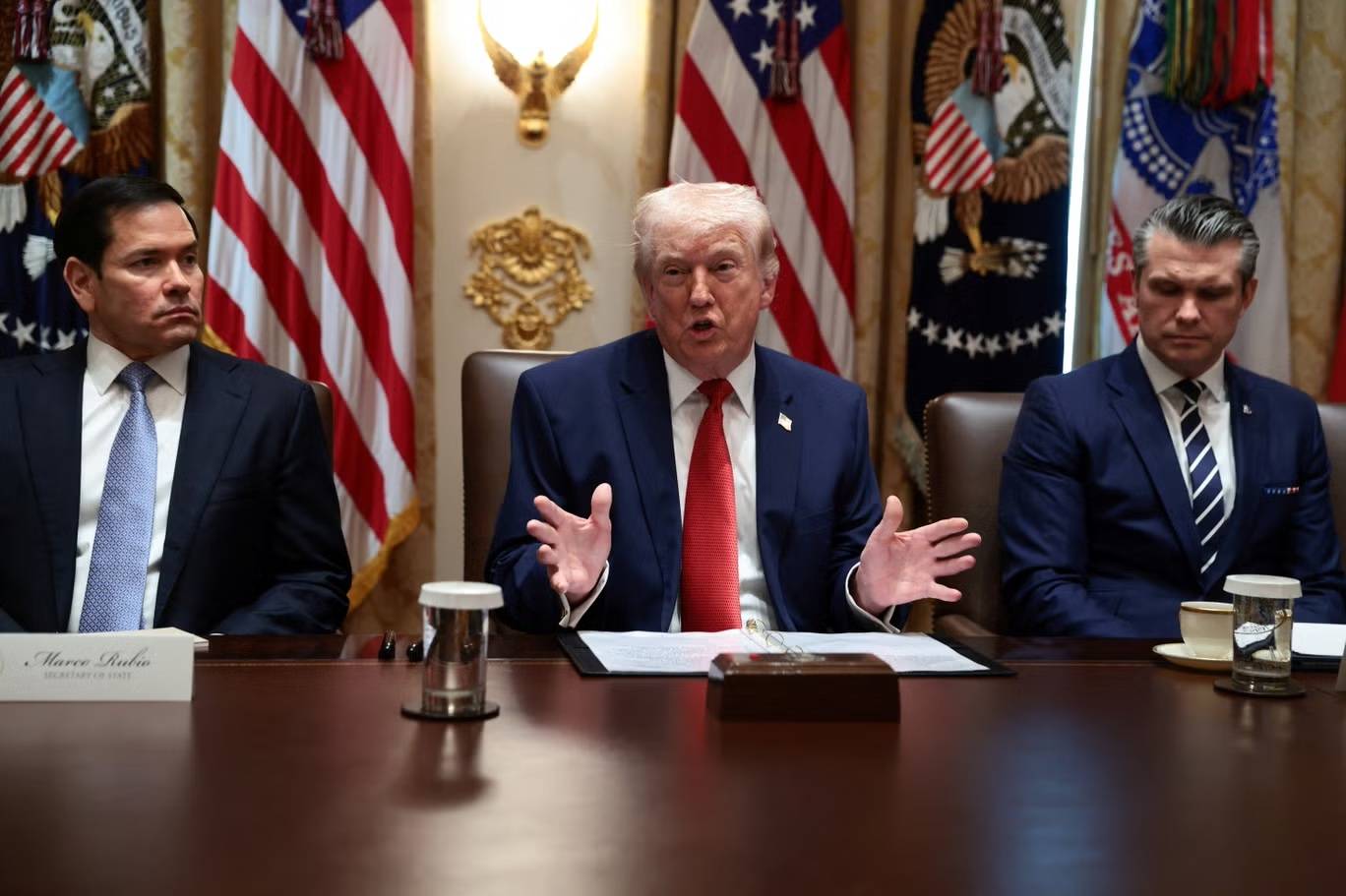
Under the noise of the explosions that are rife in the region and the continued escalation between the United States, Israel and Iran, statements by US President Donald Trump herald negotiations in a mysterious and complex diplomatic scene in which contradictory political messages overlap with the sound of missiles and marches. While the US President continues to confirm his openness to negotiation, Tehran publicly denies the existence of serious negotiating tracks, while it becomes clear from time to time that it is involved through indirect channels of communication.
The difference in public discourse cannot be read as a mere difference in positions, but rather reflects a broader pattern of complex diplomacy employed by the parties to the conflict to achieve tactical goals that go beyond the idea of reaching a final settlement to the war, which raises the question of whether we are facing a real path towards a possible comprehensive agreement, or an attempt to contain and manage the escalation.
The 15-point proposal
According to the advertiser, the United States sent through mediators to Tehran a 15-point proposal to end the war, including stopping uranium enrichment and reopening the Strait of Hormuz in exchange for lifting sanctions and supporting the civilian nuclear energy program. Previously, US President Donald Trump announced that he felt optimistic about the diplomatic track with Iran, after the strikes launched by the United States and Israel against it since February 28, which resulted in the killing of the Supreme Leader Ayatollah Ali Khamenei and senior leaders of the regime. He stressed that Iran is eager to reach an agreement to end the fighting that has been going on for nearly four weeks.
Despite statements by mediators in Pakistan, Egypt and Turkey, confirming indirect talks between Washington and Tehran, Iran denies that any kind of negotiations are taking place and pledges to continue fighting until victory. At the beginning of the week, Tehran denied the existence of ongoing direct or indirect negotiations with the Americans. The IRNA news agency quoted the Iranian Foreign Ministry spokesman on Monday as saying that friendly countries had sent messages in the past few days indicating the United States’ request to hold talks to end the war, but Iran has not yet responded to that.
The Speaker of the Iranian Parliament, Mohammad Bagher Qalibaf, also denied, in a statement attributed to him on the “X” platform, any negotiations with the United States, saying that “this fake news is being used to manipulate the financial and oil markets and escape from the quagmire in which the United States and Israel have found themselves.”
However, after the United States announced the 15-point proposal, Iranian Foreign Minister Abbas Araghchi said that his country was studying the proposal, indicating at the same time that his country did not intend to hold talks to end the war. He said that Tehran and Washington exchanged various messages through mediators, but there is no dialogue or negotiations with the United States. He explained in an interview with state television yesterday, Wednesday, that “the messages are transmitted by countries that are friendly to us, and we responded to them by clarifying our positions or issuing the necessary warnings. It is not called negotiation or dialogue… It is merely an exchange of messages through our friends.”
Among a flood of conflicting statements between the two parties, Trump said, in a speech he delivered later yesterday during an event in Washington, that the Iranian leaders “are negotiating, by the way, and are eager to conclude an agreement, but they are afraid to disclose it for fear that their people will kill them. They are also afraid that we will kill them.”
Shadow diplomacy
This scene, which may suggest confusion and contradiction, reflects the strategy of both parties in managing the conflict or reducing escalation, despite its complexity. But there is something that has always characterized the relationship between the two countries, which have had a hostile relationship since the Islamic Republic regime came to power in 1979, which is shadow diplomacy or informal talks, so that public agreements between the two parties usually fail.
The late US President Ronald Reagan established this type of diplomacy since the deal to release the US embassy employees in Tehran, although some of it was done directly but in secret. The nuclear agreement that the six international powers concluded with Iran in 2015 was preceded by many secret bilateral talks between American and Iranian officials in the Sultanate of Oman between 2012 and 2013. It was revealed in early 2015 that Obama and Khamenei exchanged secret messages that began at the initiative of the US President to improve relations, and included Obama’s offer of cooperation between the two countries in fighting ISIS if an agreement was reached on Tehran’s nuclear program.
Spreading suspicion and negotiating under pressure
In the current scene, the goals and strategies of each party differ, which is what lies behind these contradictory statements. Since launching the war alongside Israel on February 28, Donald Trump has presented shifting and often vague goals, and these mixed messages have become clear in recent days. The US President has spoken about weakening or destroying Iran’s missile capabilities, and reducing its ability to threaten its neighbors, and these are goals that he has some flexibility in announcing the achievement of.
But the more difficult goal is to ensure that Iran can never obtain a nuclear weapon, and Trump has insisted that this be part of any agreement. Reopening the Strait of Hormuz, a vital waterway through which 20 percent of global oil production passes, has now become a priority for Trump and the global economy. While Trump talks about engaging with Iran’s leaders, he has backed away from promoting the idea of the regime’s collapse. On the other hand, Israeli Prime Minister Benjamin Netanyahu still asserts that the goal of the war is to help the Iranians overthrow the ruling theocracy.
Weaken the Iranian regime and intensify pressure on it by continuing the aerial bombardment campaign, while at the same time following a strategy of conflicting and ambiguous statements. Over the past few days, Trump has sought to use ambiguity as a political and psychological weapon within the Islamic Republic. By saying that he was speaking with a high-ranking Iranian figure without naming him, he is sowing doubt and mistrust among what remains of the leadership in Tehran. Under the current circumstances, this is extremely important, as Iran’s leaders live in secret, command centers are disabled, and communications are limited for fear of eavesdropping and assassination. According to Iranian writer Mehdi Bringi, some hard-line members of parliament, including Hamid Rasaei, announced their opinions and began asking questions about who is talking to the Americans, and this is precisely what Trump seeks to achieve.
In a post Thursday morning, Trump sought to highlight the leadership vacuum within Iran, saying that “Iranian negotiators are very different and strange.” As part of his psychological warfare, he continued to stress that they are “begging” to conclude a deal, adding, “which is what they should do after their crushing military defeat, and the lack of any chance of their return, yet they publicly state that they are “only considering our proposal.” Big mistake! They better take it seriously soon, before it is too late, because once this happens, there will be no going back, and it will not be easy!” he signed his name at the end of the post.
However, Ferzin Nadimi, a senior fellow specializing in Iranian affairs at the Washington Institute, said in his interview with Independent Arabia that the American position has become more flexible tactically, even if not at the rhetorical level. Previous messages from Trump and some members of his team have ranged from tough language – essentially paralyzing the regime, unconditional surrender, or destroying the Iranian army and remaining leadership – to more specific language focused on preventing the acquisition of a nuclear weapon and weakening missile capabilities. While what we are witnessing now appears to be a shift from immediate militancy towards a coercive negotiating path aimed at reopening the Strait of Hormuz, stopping attacks, freezing the next phase of escalation, and then testing the possibility of reaching a broader agreement. It is a practical shift, even if it is not always publicly acknowledged.
On the other hand, the Iranian regime seeks to exercise internal restraint and avoid appearing weak while negotiating under pressure. Therefore, in addition to the denial’s insistence on the existence of talks, the statements issued by Tehran regarding their demands for a ceasefire have taken a more stringent turn, and they are speaking strongly about a new system for passage through the Strait of Hormuz through which Tehran imposes fees on cargo ships similar to the Suez Canal in Egypt. It also demands the payment of compensation for war damage and the closure of its bases in the region, which are both unachievable demands.
Observers believe that Tehran almost certainly wants any agreement to acknowledge that it will not negotiate from a position of public humiliation. For this reason, Iran’s conflicting messages are important: outward denial and internal testing.
Settlement or containment?
Observers do not hope for much from these negotiations regarding a settlement of the war, as the prospects for reaching a diplomatic agreement to end the war between the United States and Iran appear bleak at the present time. But others believe there is a possible path to an agreement, if both parties are willing to engage. The cessation of strikes indicates Washington’s desire to test whether military pressure has created sufficient leverage to reach a limited agreement. But Tehran’s conflicting messages strongly suggest that the regime is still trying to avoid appearing to be a negotiator under the pressure of war, which means that even if the talks are real, they are fragile and deniable.
Militarily, this usually indicates one of two near-term paths: either short-term de-escalation focused on the Strait of Hormuz and critical infrastructure, followed by broader talks; Or a breakdown in communications, followed by a return of strikes, perhaps more severely than before because both sides will conclude that the halt has failed. Therefore, the most likely path in the near term is a partial, unstable de-escalation with a high risk of relapse, especially if Iran continues to try to maintain its coercive influence in the Persian Gulf while the United States insists on restoring freedom of navigation as a basic condition, so the risk of escalation looms large. “I do not assume that the war is nearing its end,” Ndimi says. “Rather, I assume that both sides are testing whether they can turn field pressure into political gains without giving up too much.”
Any talks are likely to be fraught with tension. In an indication of the difficulty of the situation, American officials said that the United States and Israel removed the names of Araghchi and Qalibaf, known for his extremist positions, from “hit lists” for a period of four to five days, to allow for their participation if the talks are held.
Lack of confidence and a narrow path
Naturally, a climate of mistrust dominates negotiations under bombardment. While Iran needs to stop the war, Tehran’s leaders pointed out the difficulty of negotiating with a president who had engaged in talks in the past and then suddenly resorted to bombing it.
On the other hand, Trump hates the open negotiation strategy that the Iranian regime used to follow. Over the course of more than two decades of negotiating the Iranian nuclear program, the regime in Tehran has followed a strategy of working conservatively and secretively, allowing them to control the flow of information and prolong the talks to buy time and exhaust the other party in the negotiation. This may be one of the factors that prompted the US administration to quickly make the decision to go to war, and at the same time, Trump is currently presenting a counter-narrative that confronts Iran’s stubbornness and provides the Iranian public with accurate information.
Despite all this, observers believe that there is still a narrow path towards an agreement. If the two sides decide that the cost of war has become unbearable, they may reach an agreement that stops the fighting while postponing decision-making on more complex issues. Former US National Security Council official for Middle East affairs Michael Singh said in comments to the Wall Street Journal, “It is possible that the United States will continue to insist on achieving all its goals, but it is also possible to first reach a limited ceasefire that paves the way for subsequent negotiations that address broader issues.”
Observers point out that Washington and Tehran have a history of making negotiations successful despite the large differences, by postponing the most controversial issues. The 2015 nuclear agreement, which was concluded during the era of Barack Obama, included time mechanisms that postponed some files, as it restricted Iran’s uranium enrichment for 15 years, and imposed other restrictions for 25 years. But at the same time, it allowed Iran to continue enrichment, despite Washington’s strong opposition to that for years, and did not include strict restrictions on its missile program as had been announced, which is the reason why Trump withdrew from the agreement during his first term, which gradually led to that conflict.
Former US ambassador to Israel, Daniel Shapiro, said, “It is possible to reach an agreement in which each party gets part of its demands.” The agreement may aim to stop the fighting and reopen the Strait of Hormuz, with issues such as getting rid of Iranian nuclear materials postponed to later stages, while other files, such as the missile program and support for the militias, may remain unresolved for a long time. In return, Iran will receive only partial relief from sanctions. Shapiro noted, “Wars often end chaotically. If the pain becomes great enough, it may end in a partial and ambiguous agreement.”
#game #nerves #Washington #Tehran #managing #war #negotiating #denial #Voice #Lebanon #Voice #Lebanon
The game of nerves between Washington and Tehran: managing a war or negotiating through denial? – Voice of Lebanon – Voice of Lebanon
– الدستور نيوز
اراء و اقلام الدستور – The game of nerves between Washington and Tehran: managing a war or negotiating through denial? – Voice of Lebanon – Voice of Lebanon
المصدر : www.vdl.me