دستور نيوز
Ayman Hussein
Monday, March 23, 2026 – 20:53
Source: Independent Arabia
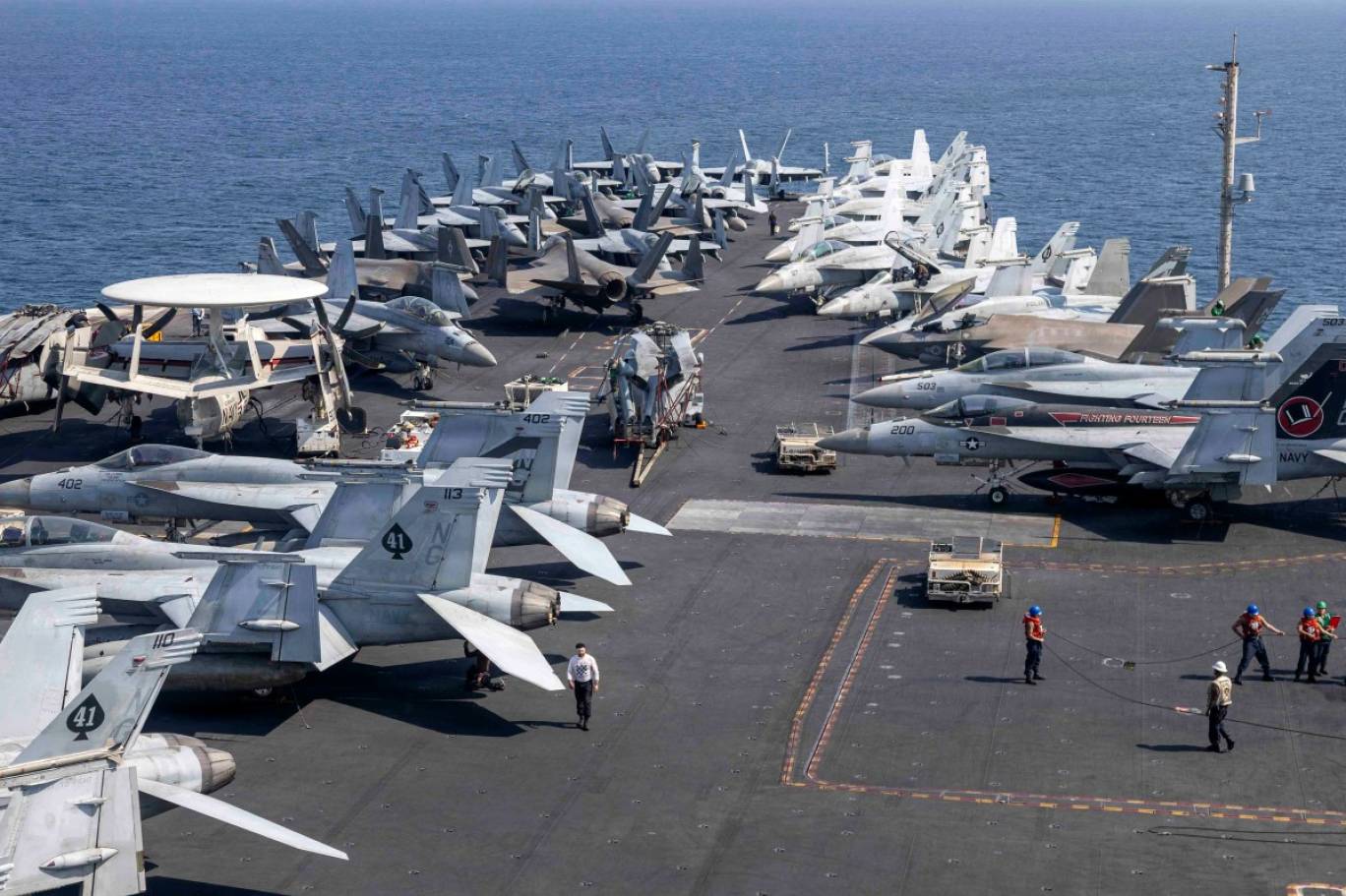
The ongoing Israeli-American war on Iran since the 28th of last February has cast a shadow over the global economy and its political and security tornadoes over the countries of the region, especially with Tehran’s attack on neighboring countries and the targeting of Israel, American interests, and the Gulf states, as if it wants to drag the region into multilateral disputes and conflicts with countries, governments, groups, militias, and peoples lining up behind them.
The direct perspective from the reality of the international political vision is inseparable from the principle of “threat to international peace and security” stipulated in the United Nations Charter, especially with the attack on neighboring countries and the violation of their sovereignty. Opinion and analysis do not deviate from what is happening in reality between two distant parties that are warring, namely Iran on the one hand and Israel and America on the other hand, and among them are countries that refuse to be “platforms for attacking their neighbors” and refuse to descend into the quagmire of the conflict of strategic interests for which the war is taking place. These countries are content with confronting the aggression against them and against them. its interests without any sign of attack.
As the war continues, current losses and future regional and international threats facing Iran are revealed regardless of what peace or surrender it ultimately leads to, as Tehran exacerbates its international and regional losses to the highest levels the country has witnessed in more than 47 years. Perhaps the most prominent of these are seven factors that can be summarized in the following lines.
The fall of the “issue” narrative
First: The fall of the ideological narrative associated with the Palestinian issue, and one of the most prominent losses suffered by Iran is the erosion of its credibility in adopting the Palestinian issue as a pillar of its regional legitimacy. Although Tehran has presented itself since 1979 as a “standard-bearer of Jerusalem,” its behavior during the recent war showed that its military tools are mainly used to serve its strategic interests, and not within a fixed vision of supporting the Palestinians.
According to estimates by Western research centers, Iran did not use major pressure cards, such as completely disrupting navigation in the Strait of Hormuz, during the height of the 2023-2025 Gaza war, even though approximately 20 percent of global oil trade passes through the Strait.
In this context, Middle East affairs researcher at the Carnegie Endowment for International Peace, Nathan Brown, said, “Iran uses the Palestinian issue as a mobilization tool, but it does not act as an actor willing to bear the cost of confrontation for its sake,” which confirms that the gap between rhetoric and practice has weakened the appeal of the Iranian model to broad Arab sectors.
Closing the Strait of Hormuz and with it targeting Israel. Iran has not resorted to either of them for more than two years as it has been watching the genocide carried out by Israel in Gaza since October 7, 2023, even if it was in support of the Hamas movement loyal to it. What is worse is that the mullahs’ regime did not direct a single shot at Israeli people or military or political targets, even if with the aim of pressuring an end to the Gaza war. Thus, its latest position exposes the falsity of its claims and the fallacy of its slogans. Its interests are nurturing, and the Iranian regime asserts that it only aligns itself with its interests and supports only its project.
Burnout and attrition
Second: The depletion of military capabilities and defense infrastructure, as the war also reveals a direct military cost to Iran, as military installations and sensitive infrastructure have been subjected to repeated strikes. Unofficial estimates indicate that Iran has spent in recent years between 15 and 20 billion dollars annually on developing its missile programs and regional networks, but an important part of these capabilities has been eroded during the current weeks of war.
The attrition extended abroad, as the strikes that targeted command and control centers led to confusion in coordination between the Revolutionary Guard and its agents in the region. According to a report by the Institute for International Strategic Studies, “any prolonged direct confrontation will lead to a gradual erosion of Iranian capabilities that will be difficult to compensate for quickly.”
There is no doubt that the ongoing war will weaken Iran’s ability to impose its regional influence by force, and even if the regime that US President Trump vowed to “topple” on the first day of the war remains, it will exhaust Tehran’s military structure, confuse command and control networks, and reduce the resources available to the Revolutionary Guard and its agents.
Agent network
Third: The decline in regional influence and Iranian proxies, as one of the most obvious losses is the decline in the effectiveness of Iranian arms in the region. The militias linked to Tehran, which were presented as an “advanced line of defense,” are now facing increasing security and political pressures, in addition to a decline in their ability to maneuver.
Data contained in several media reports indicate that since 2011, Iran has spent more than $30 billion to support its allies in Syria, Iraq, Lebanon, and Yemen, but these networks have become more exposed and less able to impose deterrence equations.
Western security observers considered that “the Iranian network of agents is no longer a net asset, but rather has turned into a costly strategic burden.” However, the continuation of the war contributes to stripping Iranian arms of its claims wrapped in religious and nationalist slogans, which was evident in the involvement of the “Hezbollah Brigades” in Iraq in military actions, as well as the Houthis in Yemen refraining from clashing while waiting for an order from Tehran, in addition to the actual entry of the Lebanese “Hezbollah” into a “fateful conflict with “Israel.”
After the fake slogan scarf fell from the source in Tehran, the shamelessness of the agents in the region will be revealed, and the militias will find in their extremist rhetoric nothing but the “hyper-sonic” Iranian narrative, as the Iranian-backed Houthis issued a statement on March 22 of this year in which they expressed their “rejection of any international movements related to the Strait of Hormuz,” and warned of any escalation, which prompts reverse dealings with Iran’s agents according to a security path only and the exclusion of the political path completely.
State fragility
Fourth: The fragility of the Iranian interior was exposed. The war was no longer limited to the outside, but rather had an economic and security impact on the Iranian interior. The increasing sanctions, in addition to the cost of the war, pushed the Iranian economy further into decline, as the local currency recorded successive declines, with inflation exceeding 40 percent according to International Monetary Fund estimates before the outbreak of the war, and food prices exceeded 105 percent after the outbreak of the war, according to statements by economists to Iranian media.
America and Israel’s targeting of some facilities inside Iran showed that its geographical depth is no longer as fortified as was thought. An analysis by the Chatham House Center considered that “Iran’s ability to internally withstand is linked to economic stability, which is subject to unprecedented pressure” as the war continues.
The easy targeting of Iranian leaders at the level of senior figures, first and second echelons, whether in the 12-day war in June 2025 or last February, confirms that the human structure within the regime is “fragile.” Reuters reported that, unlike the major leaders, starting with the former guide Ali Khamenei and the National Security Advisor Ali Larijani, “reports confirm the killing of lower-level officials” in repeated raids.
Economic bleeding
Fifth: Direct and indirect economic losses, as Iran incurred huge losses as a result of the decline in its oil exports and the disruption of supply chains, even after US President Donald Trump decided last Sunday to exempt two Iranian oil tankers from sanctions.
Despite its attempts to circumvent the sanctions, estimates indicate that Iranian oil exports decreased during periods of escalation to less than one million barrels per day, compared to its production capacity, which exceeds 3 million barrels. The costs of the war and additional sanctions led to billions of dollars in losses, at a time when the country needs huge investments to rehabilitate its infrastructure.
At a time when some local media outlets noted in the second week of the war that “the Iranian economy cannot tolerate a long war, because every day of escalation means an additional depletion of hard currency,” the advisor to the Commander of the Guard, Ali Fadavi, said to state television, “They must keep in mind the possibility of their involvement in a long-term war of attrition that will destroy the entire American economy, as well as the global economy,” and his speech appears to be related to the rise in oil prices and expectations that it will reach $200 a barrel.
The strangulation of the Strait of Hormuz has prompted some oil and gas producers to search for alternative routes and paths that have achieved gains with the rise in oil prices to about $120. Even the idea of the fragility of short-term gains that quickly turn into losses with the expansion of the targeting of Gulf energy facilities is not practical, and fears are dissipating with the global interest in reaching a stable situation and protecting oil and gas production sites, as well as securing its transportation corridors and paths.
Decline in international role
Sixth: Decline in political and diplomatic standing. At the international level, the war has reduced Iran’s political maneuvering margin. Instead of being a party that is difficult to bypass, it has become increasingly presented as a threat factor to regional and international security, especially with the targeting of navigation and energy. This has prompted the strengthening of international coordination against it, whether through naval alliances or joint security measures, which deepens its isolation.
European newspapers quoted statements from diplomatic sources that “Iran’s behavior in the recent crisis reinforced the conviction that it is part of the problem and not the solution,” and Foreign Minister Abbas Araqchi, who represents the head of Iranian diplomacy, seemed to have his speech saturated with statements by the new and old guides and the Revolutionary Guards, whether in talking about “the continuation of the war” or “demands to pay compensation,” which he repeated in more than one statement.
Perhaps what also reflects the political and diplomatic decline is what Trump repeatedly mentioned that he did not “find anyone to talk to in Iran,” in addition to the destabilization of trust between Tehran and the Arab capitals in the region, especially those that targeted it, and Araqchi’s statements about envoy Steve Witkoff’s communication with him did not rise to the diplomatic form when he spoke about him, saying, “The last communication with him was when his employer decided to end the negotiations.”
Iran lost international confidence in its story and promises, with which President Masoud Pezeshkian came out apologizing to neighboring countries and stressing that his country “will not target them again,” and the next day and to this day it is still attacking Arab countries with ballistic and mobile missiles and guided drones.
Loss of regional seat
Seventh: Accelerating the restructuring of the regional system at Tehran’s expense. Perhaps the deepest loss is the acceleration of transformations in the structure of the regional system. The war pushed towards strengthening security cooperation between the countries of the region and their international partners, and redefining the concept of regional security away from the “axis” model on which Iran relied. The international focus on protecting sea lanes and energy security reduced Tehran’s ability to use these cards as a strategic pressure card.
According to estimates, more than 60 percent of global energy supplies came under strict international protection arrangements during the crisis, which reduces the effectiveness of Iranian threats.
The recent war, especially with the suffocation of the Strait of Hormuz and the attacks on neighboring countries, revealed that the Gulf countries are not consumers of security, but rather exporters of it, and that they are a fundamental pillar in the sustainability of global security, and any infringement on the security of these countries shows its consequences on the global economy and on the security and political trends of the major international powers.
Perhaps the truth that Iran does not realize is that the more it targets regional energy facilities and structures, and the more it raises its threats to the sea lanes, with the aim of remaining in the regional security equation, it will be met with a greater escalation to remove the tentacles of the threat and remove Tehran from the global security system and place it in the “dangerous countries” box.
Accumulated losses
In the end, indicators reveal that the ongoing war is not just a military confrontation, but rather a turning point in Iran’s regional position, as Tehran finds itself facing a more complex equation than ever before, with a military, economic and political decline, and a loss of confidence that may lead to international isolation whether the current regime remains in power or changes, as restoring international relations will require several years.
The accumulation of structural losses in the Iranian project, in which military pressures intersect with economic exposure and political decline, as the global website (MeasuredWorld) reported that the economy before the war was barely growing at a rate of approximately only 1.1 percent in 2026, compared to inflation ranging between 14 and 48 percent. Of course, these numbers will worsen with the war and after it.
One of the most important challenges is that the destruction of infrastructure will have social impacts that cannot be ignored, as estimates indicate the possibility of pushing about two million additional people into the cycle of poverty during the coming period in a country where poverty rates actually ranged between 22 and 50 percent immediately before the war, and internal priorities after the war will exhaust the country and push it outside the regional system in a strict international environment with Tehran.
At the same time, the ongoing transformations in energy security and sea lanes, which represent about 20 percent of global oil supplies through the Strait of Hormuz, are no longer a guaranteed pressure card for Tehran, but rather have turned into a factor that calls for a collective international response that limits its ability to employ this card strategically, according to what the British newspaper “The Guardian” reported.
Published articles represent the opinion of their authors
#losses #incurred #Iran #regionally #internationally #result #war #Voice #Lebanon #Voice #Lebanon
7 losses incurred by Iran regionally and internationally as a result of the war – Voice of Lebanon – Voice of Lebanon
– الدستور نيوز
اراء و اقلام الدستور – 7 losses incurred by Iran regionally and internationally as a result of the war – Voice of Lebanon – Voice of Lebanon
المصدر : www.vdl.me