دستور نيوز
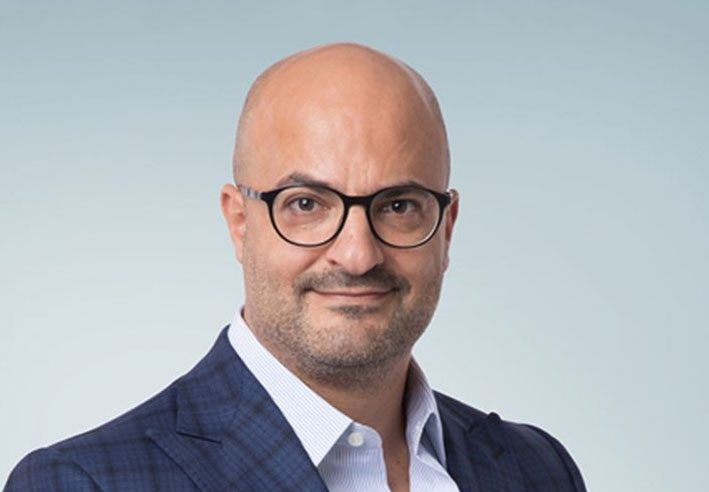
Written by Nadim Qutaish
“Asas Media”
I do not address you as a vulgar opponent, even though you have always cultivated enemies from the womb of every difference of opinion. Rather, I write as a Lebanese, that is, as the person who is condemned to share this geographical space with you, and as a witness who has experienced for many years how this country paid the price for choices that it did not participate in formulating.
The war ended. I do not mean that war that you longed to fight, nor the one upon which your military structure was modeled. Rather, I mean the “real” and implicit war that has taken place since 1979 between the imperialist ambitions that accompanied the Iranian Revolution, and the sovereign rights of peoples and countries that Tehran forcibly recruited into its overall project. That war has been decided.
This statement is not an exaggeration in assessment, but rather an acknowledgment of the collapse of the strategic urbanization that Tehran built over four decades, to act as a cordon of fire on behalf of Iran and restrain the fighting outside its borders. The single arenas, in Lebanon, Syria, Palestine, Yemen, and Iraq, have become isolated fronts, receiving strikes, simultaneously with Iran being struck at its heartland.
With the geographical path interrupted by the fall of the Syrian pillar, and the liquidation of the military elite embodied by the assassination of Qassem Soleimani, then Hassan Nasrallah, and the rest of the structure, all the way to the Supreme Leader, the thousands of missiles that the “party” is launching today have become merely tactical noise, lacking any strategic horizon. It was not deterred from attacking Iran, did not protect its nuclear program, did not come to the rescue of Gaza, and was unable even to protect the symbolic head of its regime.
It is a defeat whose symptoms appear in the retreat from the regional and global legitimacy of the idea of resistance to narrow national fanaticism, and it also appears in the funeral silence that surrounds an environment that has begun to ask fervently about what remains of the promises of divine victory in the face of the wreckage of reality and the enormity of the fate.
I do not write libel or defamation. It is, by God, an invitation to restore reason, perhaps for the first time in decades, to reflect on who you are and what you have become, not on what you imagine and desire.
First: In the architecture of illusions
Your project was based on the premise that the Shiite community in Lebanon, a group that has historically suffered from marginalization and real injustice, and has always carried a legitimate pride in its identity, can find dignity, strength, and political weight by becoming a forward base. For the Islamic Republic. Khomeini gave you an identity that transcends your Lebaneseness and Arabism, Khamenei gave you an arsenal of weapons and treasure troves of money, and the Revolutionary Guard gave you a combat doctrine. In return, you offered them Lebanon as an offering on this altar.
This trade-off seemed rational in the climate of 1982, but today, in 2026, it seems rude. The Islamic Republic, which embraced your birth, has just suffered the greatest strategic and military setback in its history. What was called the “axis of resistance” was revealed for what it had always been: not an alliance of steel power, but a series of breakable tools. Today, you are nothing but a link in that chain whose knot has been broken.
Second: In the meaning of “resistance” and its shifts
You will say that we fought for Palestine, fought the occupation, and were the shield of the oppressed in the face of arrogance. Let us acknowledge to you the “moment of the year 2000” and the popular resonance and military prestige that it entailed. That was a short moment mixed with some realism, and in it you represented the desired resistance of millions, and not just of Lebanese Shiites. But, a reluctance to serve whom?
This is the question you have avoided answering honestly. The so-called resistance was never, in its essence, for the sake of Lebanon, nor for the sake of the Palestinians, but rather was about the survival and expansion of the regional system of the Islamic Republic. Every missile launched towards Israel after the year 2000 was harnessed to serve the Khomeini doctrine of deterrence. Every Lebanese village destroyed in wars brought on by your logic was a sacrifice for the sake of Iranian geopolitical calculations. Every young Shiite sent to Syria to support the Assad regime did not go to liberate an inch of Palestine, but rather to secure the land corridor from Tehran to Beirut. Palestine was the flag, Iran was the state, and Lebanon was the high cost, and it still is!
Third: Lebanese Shiites are not Iran
This is an argument that requires insight, because it is the truth that you have been obliterating with iron and fire. The Shiites of Lebanon are one of the most ancient groups rooted in this land, and the history of their path and position precedes the establishment of the Islamic Republic by many centuries. The injustices that befell them and the grievances that befell their being, whether those that feudalism or sectarian marginalization bequeathed to them, leading to the nightmare of the Israeli occupation, are purely Lebanese tribulations that grew in the soil of this East and its issues, and were never an external attachment to imported Iranian issues.
Although Mr. Musa Al-Sadr realized this, he built a movement rooted in Lebanese Shiite identity, in civil dignity, and in the memory of this group and its geography. When he was absent, you took his place, and the first thing you did was to subject this identity to an external revolutionary project. You gave the Shiites a weapon and made them believe that it was dignity, and you raised an Iranian flag over them and said it was your flag, and you entered them into an eternal war and called it a victory.
During this path, what condition do we find in the suburb’s facilities and dilapidated buildings today? What catastrophic numbers are recorded in the record of the rates of dislocation and migration of Shiite youth in search of survival?
The distressing economic reality in the south, the Bekaa, and the suburbs is inseparable from the mini-state you established that grew within the bowels of the entity, and you were keen with suspicious persistence to prevent the establishment of a mature state. The emergence of a healthy Lebanese state, in which the Shiites would be integrated as full citizens, would undermine your functional role as a delegated mediator or authorized agent of the decision-making center in Tehran. Your authority has, in essence, fed off the fragility of the Shiite community and its perceived poverty. It was in your interest to perpetuate that weakness and fence it off with the walls of fanaticism, so that joining you would remain the only available option.
Fourth: Presentation and outcome
I am not claiming, by way of gross simplification, that disarmament is what makes things easier, or that the Lebanese state, in its current decline and the weakness of its corrupted institutions, today possesses the guarantees that make abandoning the logic of force a cold technical act. However, consider carefully the core of what you are defending: In essence, you are fighting for forced integration into a regional regime that has become defunct, and you cling to loyalty to a shepherd who no longer has any benefit or protection for himself, or for you, and you cling to a military doctrine that has become obsolete and has been invalidated by grand calculations and technological conquests.
This weapon that you hold is no longer a source of invincibility, but rather has become a heavy existential burden on you, on the Shiite community in its difficult consequences, and on Lebanon in its development. It is the stumbling block against the revival of Beirut, the buffer that deters every possibility of recovery, and the solid obstacle to the establishment of true sovereignty. There is another path, which is not the path of humiliating “surrender,” but the path of structural transformation. That is, to return to the orbit of purely Lebanese political practice, with a program that grows on its soil and with a base that belongs to its interests, instead of positioning yourself as an Iranian tool in a Lebanese mailbox. Transformation, according to the sober tradition of history, is not humiliation, but rather an astute realization that the maps of the world have changed, and that the supreme condition for survival lies in the ability to change with them.
Fifth: In possible alternatives
The transformation I call for is not a surrender of weapons in the enemy’s arena, but rather something more difficult and deeper than that: it is a reconciliation with the idea of the state as a framework for producing power, not as an obstacle to it. This reconciliation, if it is to be real and not maneuvered, requires three concomitant transformations:
1- To move from the logic of guardianship to the logic of representation. The Shiite community in Lebanon does not need a guardian to decide its overall fate. Rather, it needs political leaders who negotiate within the entity and accumulate gains from it, instead of positioning themselves outside of it and subjugating it to another center. The “Amal” movement, and its known investment in the state of corruption, was in its truest moments, after the Taif Agreement, an expression of this logic: the logic of Lebanese Shiism as an identity seeking a position in the state after a period of attacks on the state from outside it.
2- To give up the monopoly on defining dignity. You have spent decades deluding the Shiite community that dignity is the missile, that pride is the fighter, and that self-esteem only comes from preparing for eternal war. However, the true dignity of a Shiite young man is not embodied in the glint of guns, but in a school for true knowledge and not dogmatic indoctrination, in a hospital that provides hospitalization away from the stigma of pastoral favoritism, and in an economic space that accommodates his surge of ambition, instead of forcing him to make the tragic choice between immigration or blind obedience. This dignity, in its structure and meaning, is not built by weapons, but rather emerges and is established despite its power and in isolation from its continued draining of the nerve of life.
3- To recognize that the sovereignty of the decision on war and peace must return to the Lebanese state. Not because this state is innocent or clean, but rather because the absence of this sovereignty is what made every attempt to advance hit the roof of your weapons. The investor who refrains from Beirut is not refraining from Arab Lebanon or Mediterranean Lebanon, but rather refraining from Lebanon, in which an armed party has the right to go to war in isolation from the will of everyone. This reluctance in itself is a punishment that the Shiite must bear first before anyone else.
This path is not without costs. Whoever transforms bears the burden of transformation, and whoever negotiates gives up some of what he thought was a fortress. But the alternative is not the illusion of glorious steadfastness, but rather continuing to pay a bill on behalf of those who no longer have anything to pay.
Sixth: In the desolate alternatives
But if you choose to withdraw, and decide to consider the situation merely a passing “setback,” and cling to the ruins of that crumbling axis, deluding that living under its ruins means steadfastness, then let it be known to you the enormity of what you are choosing: you are, in fact, choosing perpetual war in the face of a regional environment that no longer gives weight to your narrative. Corroded, and you choose to make the Shiites of Lebanon permanent hostages of a conflict whose chapters have not been written and in which they will reap nothing but ashes. This choice of yours is a representation of the “last guard” in a defeated empire, fighting for the sake of a ruler whose shadow receded, not whose shadow lasted.
History, in its strictness, will not call this choice of yours resistance or steadfastness, but rather it is a desperate battle of retreat in a war whose records have been forgotten and whose end has already been decided.
Final word:
Lebanon is a bitter, old, and exhausted entity. However, he is haunted by that stubbornness that is inherent in ancient places. Its history was crossed, and disappeared, by the hordes of Crusaders and Ottomans, and it passed through the French Mandate, Arafat’s gambles, Syrian tutelage, Israeli occupation, and Iranian hegemony, and it experienced the horror of the explosion of its civil wars, and remained standing proudly as its living ruins. He will, without a doubt, be absolved of your choices as well, as the entity utters everything that is “external” about its tranquility.
The alternative today is not to continue in this neurotic ideological coma that feeds on the glorification of devastation, but rather to have a courageous reconciliation with the logic of the state. The only question before you remains: Do you choose to be a building block in its remaining nucleus and the workshop of its rebirth, or do you insist on being the last obstacle in the path of this rebirth?
The door is still open for a return to the national community, but, like all great opportunities in history, it will not remain open forever.
Nadim Qutaish
#leadership #party #shadow #receded
To the leadership of the “party”: Its shadow has receded
– الدستور نيوز
اراء و اقلام الدستور – To the leadership of the “party”: Its shadow has receded
المصدر : www.elsharkonline.com